The BEAT-PCD Project
Better Experimental Approaches to Treat Primary Ciliary Dyskinesia (BEAT-PCD) Clinical Research Collaboration (CRC) is a Europe-led international network of multidisciplinary researchers and clinicians interested in PCD. It was first accredited by the European Respiratory Society (ERS) Science Council in 2020, with renewed support for a second period (2023–2026), and has now been extended for a third period (2026–2028). The network coordinates research spanning basic science through to clinical care, with the ultimate goal of improving diagnosis, standardizing and strengthening clinical management, and developing evidence-based treatments that lead to better long-term outcomes for people living with PCD. Read more.
Primary Ciliary Dyskinesia (PCD) is a rare genetic disease. Cilia that line the mucosal surface are dysfunctional and cannot clear mucus leading to neonatal respiratory distress, persistent daily wet cough, recurrent upper and lower airway infections, bronchiectasis, hearing impairment and persistent rhino-sinusitis. Cilia are common structures throughout the body, so PCD may affect other organs, for example leading to situs inversus, congenital heart defects and infertility. Variants in more than 50 different genes have been identified to date, accounting for approximately 70% of PCD.
Featured events
More events can be found in the dedicated Events tab.
News
BEAT-PCD has reached the final step in its digital transformation!
Explore our new, simplified website at www.beat-pcd.org for faster access to resources, research, and community updates.
New publication
New insight into PCD: Researchers from University of Münster (lead prof by Heymut Omran) and Harvard Medical School (lead by prof Alan Brown) have identified a previously unknown transition zone linker whose defects cause structural and functional abnormalities in motile cilia—revealing a new genetic mechanism underlying primary ciliary dyskinesia. Read the full story
BEAT-PCD Newsletter
The issue 13 of the BEAT-PCD Newsletter is available along all the previous issues on the Newsletters page.
BEAT-PCD meeting at the ERS Congress 2026
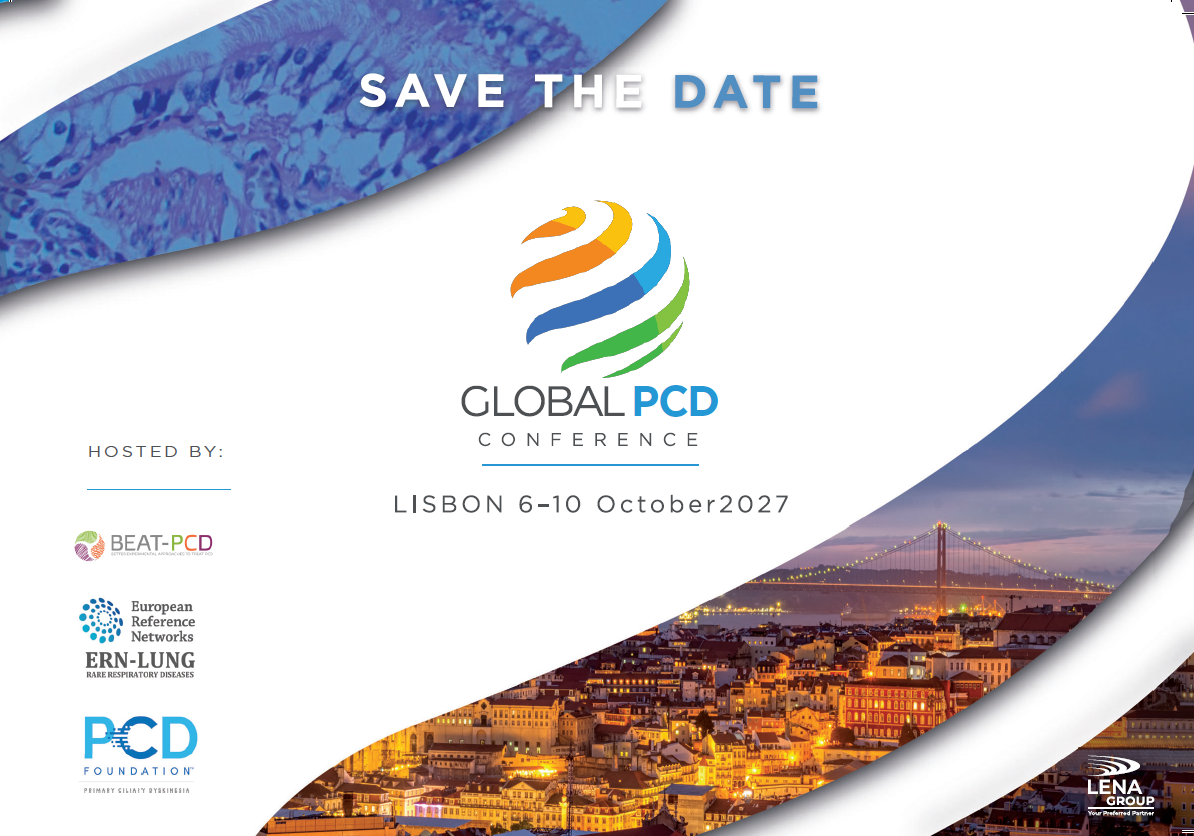
With the establishment of the Global PCD Conference, there will no longer be a separate BEAT-PCD research meeting held ahead of the European Respiratory Society (ERS) Congress. However, we would like to invite everyone attending the ERS Congress who is interested in BEAT-PCD activities to join our BEAT-PCD Management Committee Meeting on Saturday 5 September at 14:00 CET. The meeting will provide an opportunity to hear about the latest achievements and ongoing activities across BEAT-PCD, learn more about current research projects, receive an update from our PCD patient partners, and discuss future priorities for the network. Attendance is only possible in person and is open to ERS-registered participants.
PCD Patient Conference 2026
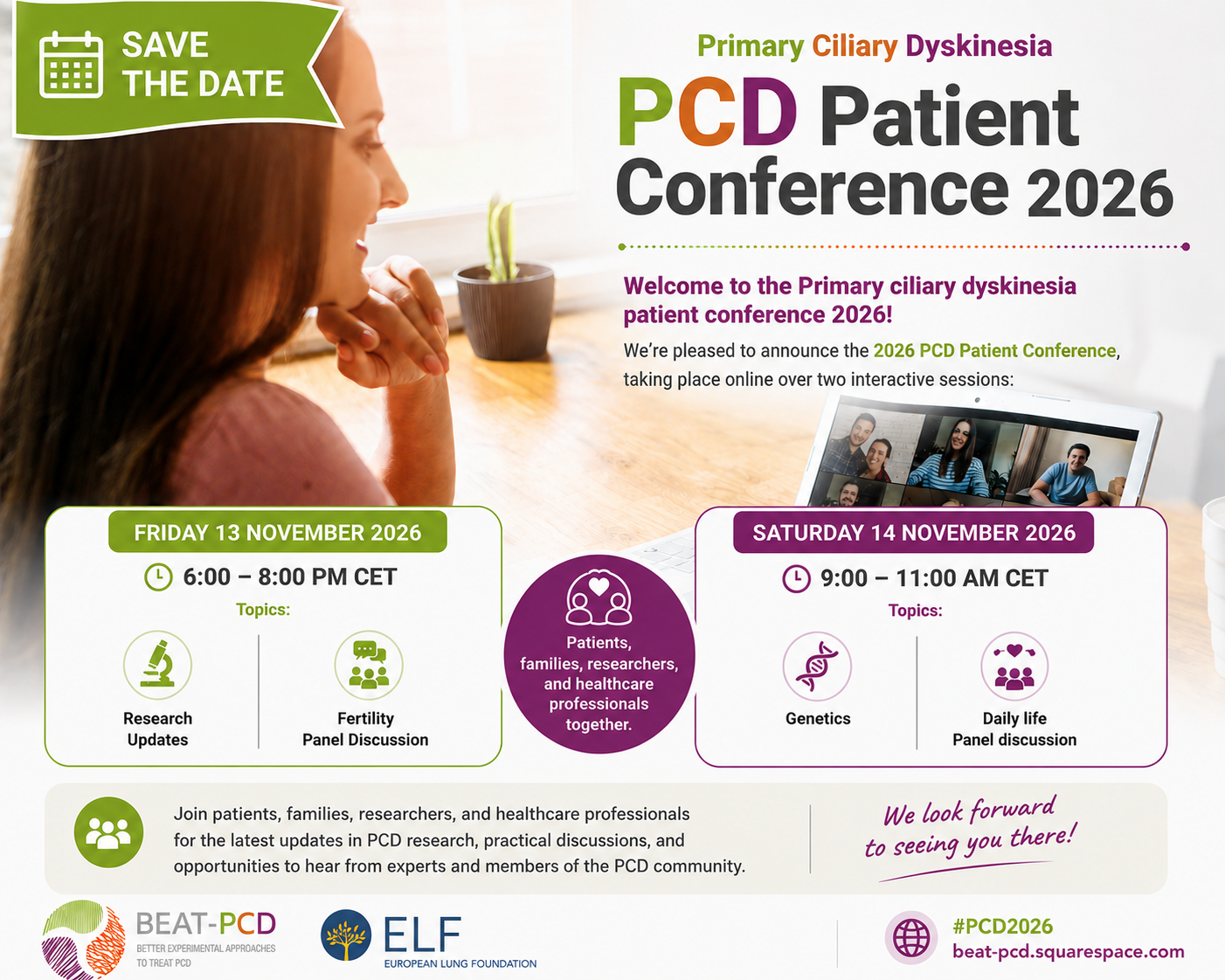
Save the date! The 2026 PCD Patient Conference will take place online across two interactive sessions: Friday, 13 November 2026 (6:00–8:00 pm CET) and Saturday, 14 November 2026 (9:00–11:00 am CET). The programme will feature the latest research updates, a patient panel discussion, sessions on genetics, and practical discussions on daily life. Join patients, families, researchers, clinicians, and healthcare professionals from across the PCD community to learn, share experiences, and hear from leading experts. Further information, including the full programme and registration details, will be available soon on our event page.
High-Speed Video-Microscopy (HSVM) training
The "Work Package 3 - Improving PCD Diagnosis” is delighted to launch the High-Speed Video Microscopy (HSVM) Training Hub, a free educational resource designed to support healthcare professionals, scientists, and trainees involved in the diagnosis of primary ciliary dyskinesia (PCD). Developed by international experts, the training hub features comprehensive learning modules covering the principles of HSVM, sample preparation, ciliary beat pattern assessment, interpretation of findings, and best practices to promote accurate and consistent diagnosis. Whether you're just getting started with HSVM or looking to refine your expertise, the hub offers practical, evidence-based guidance to support your learning. Once you've completed the modules, put your knowledge to the test with the end-of-course quiz and see how your newly acquired skills measure up!
BEAT-PCD is back on Facebook
To make it easier for patients, families, healthcare professionals, and researchers to stay connected with the latest PCD news, resources, events, and research updates, we have launched a new BEAT-PCD Facebook page. Follow us and join the conversation: BEAT-PCD Facebook page