
The Network

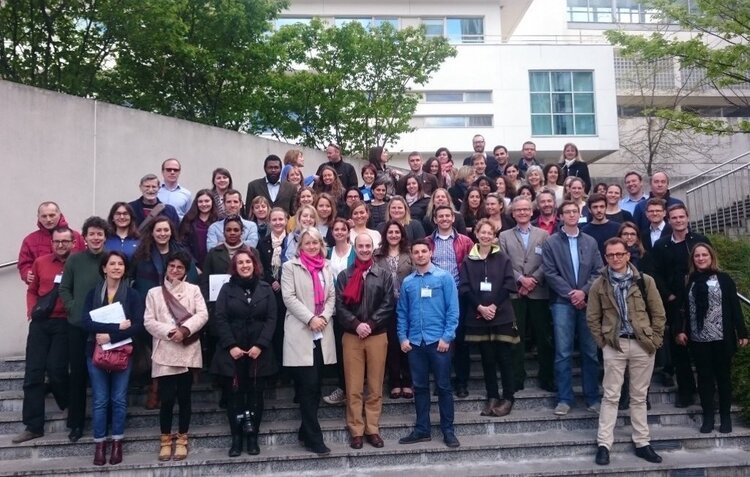
Previous European initiatives, including two European Respiratory Society (ERS) Task Forces (2006-2009/ 2014-2016), an FP7 funded project (BESTCILIA 2012-2015) and the EU COST Action BEAT-PCD (2015-2019) built up and strengthened a multidisciplinary Europe-led network, which includes numerous researchers, clinicians, other health professionals and patient representatives from 27 countries. Despite advances in awareness, diagnosis and clinical care for patients with PCD, diagnosis remains complex with inequalities between countries while treatment is based on expert opinion and is borrowed from other diseases such as cystic fibrosis. Therefore, with this ERS clinical research collaboration (CRC) during this next period 2023-2026 we aim to advance clinical and translational research in PCD through building upon the foundations set by the previous collaborative initiatives and our achievements during 2020-2023.
Aims
Improve and standardise diagnosis and clinical care
Expand and develop further available research resources, including also in neglected areas
Set a framework for clinical trials
Engage PCD patients in research activities
Develop collaborations with other networks and relevant stakeholders


Work Packages
The BEAT-PCD ERS CRC during its 2023-2026 period is organized in 9 Work Packages (WP). WPs collaborate closely, share projects and have large overlap. We invite everyone to be involved in as many activities they are interested. These may span several work packages, or all of them. WP1: Project management and governance - WP2: Open access database of PCD disease causing variants - WP3: Patient engagement activities - WP4: PCD bioresources & biomarkers - WP5: Clinical outcome measures - WP6: Neglected areas for PCD research - WP7: Improving PCD diagnosis - WP8: Clinical standardisation and education - WP9: Early Career members and dissemination of CRC activities and results.
CRC governance
The chairs and co-chairs of each WP together with the chairs of the BEAT-PCD ERS CRC form the management committee which plans the activities of the BEAT-PCD ERS CRC, discusses and ensures its progress and reports to the ERS and the network. The management committee includes also patient representatives and early career members. In specific occasions, other stakeholders who are not part of the management committee may request to attend a meeting or part of it, discussing specific issues.
CRC chairs: Amelia Shoemark, Myrofora Goutaki
Management committee: Pinelopi Anagnostopoulou, Laura Behan, Mieke Boon, Mathieu Bottier, Suzanne Crowley, Eleonora Dehlink, Lucy Dixon, Nagehan Emiralioglu, Eric Haarman, Claire Hogg, Claire Jackson, Panayiotis Kouis, Claudia Kuehni, Yin Ting Lam, Marie Legendre, Susana Lopes, Trini López Fernández, Jane Lucas, Bernard Maitre, June Marthin, Hannah Mitchison, Jean-François Papon, Lidia Perea, Johanna Raidt, Felix Ringshausen, Jobst Röhmel, Phil Robinson, Nisreen Rumman, Guillaume Thouvenin, Mine Yüksel Kalyoncu.